
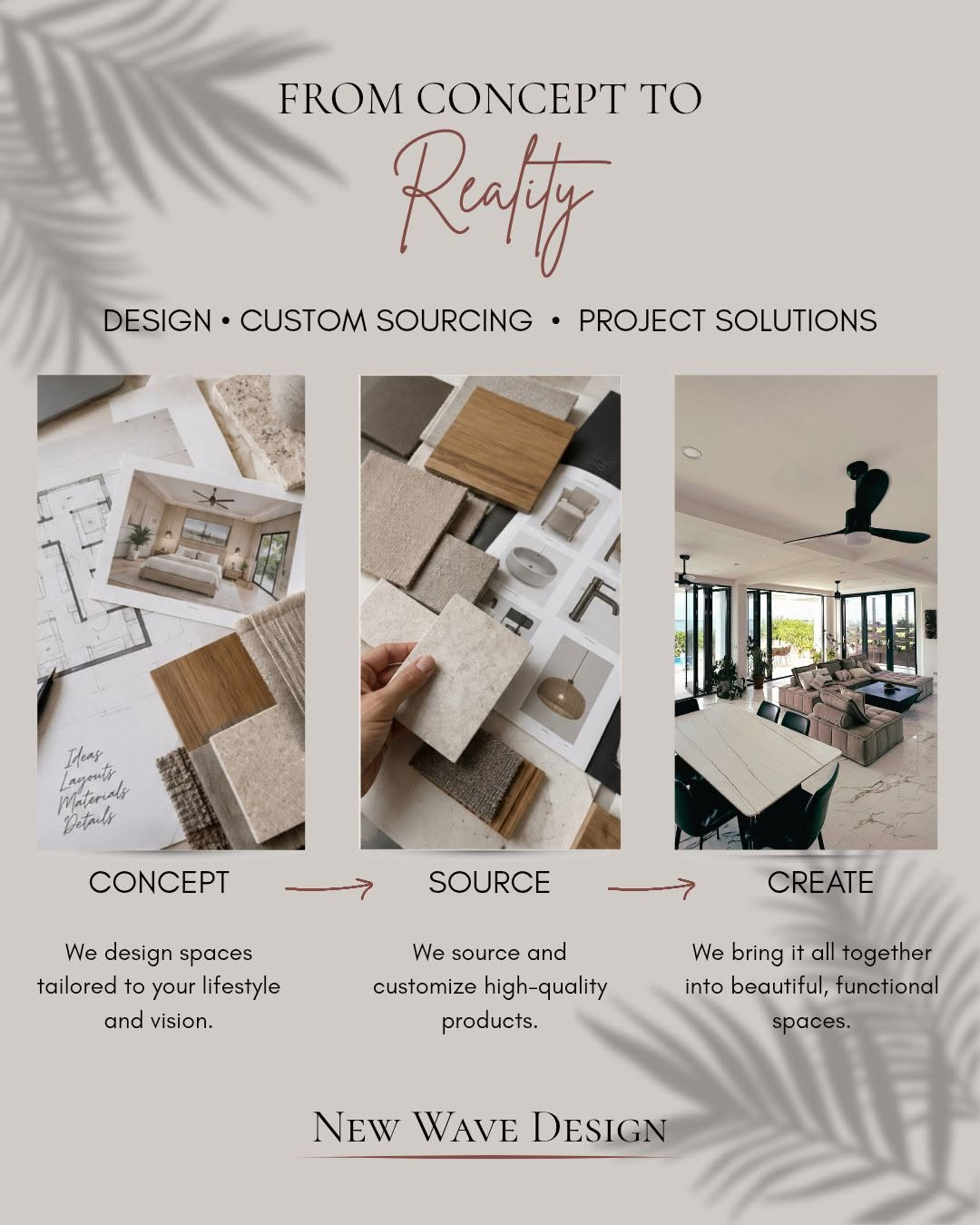
You do not need to arrive with every decision made. A useful first conversation begins with what you want to achieve, what already exists and where you need help. New Wave Design uses that starting point to develop a clearer brief for design, custom sourcing or both.
1. Share the starting point
Tell us about the property or space and why you want to work on it. Is this a new home, a room that needs updating, an outdoor area or a search for particular project items? Photographs, plans and examples you like are useful because they give the discussion something concrete to work with.
We also need to understand how the space will be used. A personal home and a guest property may have different priorities, even when the visual references look similar. A few sentences about your expectations are often more useful than a long list of disconnected products.
2. Define the decisions that matter
We discuss the design direction, requirements and available information. Measurements, quantities, budget and timing help determine which options are relevant. Where details are missing, we identify what needs to be established rather than treating assumptions as confirmed facts.
For interior projects, this might mean clarifying the rooms and the furniture or finishes involved. For sourcing enquiries, it may mean developing a specification that allows products to be compared sensibly.
3. Agree a scope before proceeding
The next step depends on your project. We clarify the proposed services, responsibilities and information needed before work moves forward. A discussion or a reference image is not a confirmed order: product selections, costs and any purchasing or delivery arrangements need to be agreed explicitly.
This stage is also the place to discuss coordination with other people working on the property. Technical design, structural checks, construction and installation responsibilities should be clear wherever they affect the proposed work.
4. Keep the choices connected
A good brief remains a reference point as decisions develop. Checking furniture, materials and finishes against it helps keep the project coherent and makes changes easier to discuss. If a priority changes, it is useful to revisit its effect on the wider selection rather than adjust an item in isolation.
Our preparation guide will help you organise the first information. When ready, tell us about your project by email or WhatsApp, or call our Belize number.